DISTRIBUTED ANTENNA SYSTEMS

Buist provides Distributed Antenna System (DAS) solutions for commercial facilities across West Michigan, improving in-building cellular coverage for occupants and first responders. DAS uses a network of strategically placed antennas to deliver a consistent wireless signal throughout a building, reducing dead zones and supporting reliable communication in critical environments.

CONTACT US
Circuit Background Pattern

CELLULAR DAS

A Distributed Antenna System (DAS) is designed to enhance cellular connectivity and coverage in areas where traditional cell tower signals struggle to penetrate, such as large buildings, stadiums, or campuses. Cellular DAS consists of a network of spatially separated antenna nodes connected to a central source via a transport medium. The Buist team will conduct a survey at your facility to assess current cellular service, review the findings with your team, and explore the best solution options to improve coverage.

Donor DAS

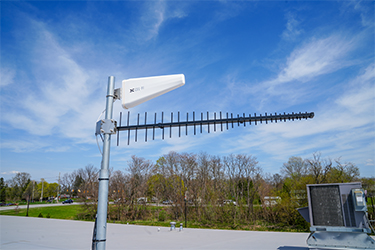
A Donor DAS operates as a repeater by capturing the existing cellular tower signal and transmitting it through FCC-approved devices and antennas.

Backhaul DAS

Backhaul DAS directly connects to the carrier’s network via a hardline, typically using fiber and provides a more consistent and reliable connection because it directly interfaces with the carriers’ network.

PUBLIC SAFETY DAS

Public Safety DAS (ERCES) is designed to improve in-building radio coverage for emergency responders, operating on the 700/800 MHz frequency bands. In many structures, especially those with thick walls or underground areas, radio signals can become weak or blocked. Public Safety DAS addresses this by distributing signals throughout the building, ensuring that first responders maintain clear and reliable communication during emergencies. This system is often required by fire and building codes to support life safety and is typically reviewed and approved by the authority having jurisdiction (AHJ).

Compliance

  • New buildings must provide 95–100% in-building radio coverage for first responders
  • 100% coverage is required in critical areas such as stairwells, pump rooms, and fire command centers
  • Renovated buildings must meet the same coverage thresholds to receive re-occupancy approval
  • Systems must support public safety frequencies, Michigan requires 700 MHz and 800 MHz
  • Annual ERCES inspections are mandated to verify ongoing system performance
  • Non-compliance (under OFC 510 and NFPA 72) may result in civil or criminal penalties, as determined by the local authority having jurisdiction (AHJ)

Why it Matters

  • Critical Communication Access: Enhances radio signal strength in traditionally poor coverage zones like basements and mechanical spaces, enabling consistent communication for emergency crews

  • Reduces Emergency Response Risks: Improves coordination during emergencies, which can directly impact rescue speed and situational control

  • Streamlined Emergency Operations: A properly functioning Public Safety DAS allows fire, police, and EMS personnel to use their radios effectively without relying on cellular or external networks

  • Inspection Readiness: Helps building owners pass system functionality inspections with confidence and minimize delays during construction or renovation closeouts

  • Preparedness Assurance: Provides building occupants and managers with confidence that the space is equipped to handle emergency communications during crises

  • Code Compliance & Legal Protection: Demonstrates adherence to national fire and building codes (NFPA 1225, UL 2524, and, IFC Section 510), helping owners avoid costly fines, delays, or legal liabilities
  • Meets AHJ Requirements: Systems are evaluated and approved by the local authority having jurisdiction (AHJ), which is critical for obtaining and maintaining occupancy permits

The Buist Advantage

  • Single point of responsibility
  • Quick response to change
  • Cost tracking and budget management
  • 60+ years of experience
  • Attention to detail
  • Design with quality and value in mind
  • Continuous communication between owner, construction manager, design team, and installers

OUR PROVEN PROCESS

Our DAS process is based on years of industry experience and proven best practices, ensuring consistent, high-quality system performance, and reliable connectivity for our clients.

SURVEY

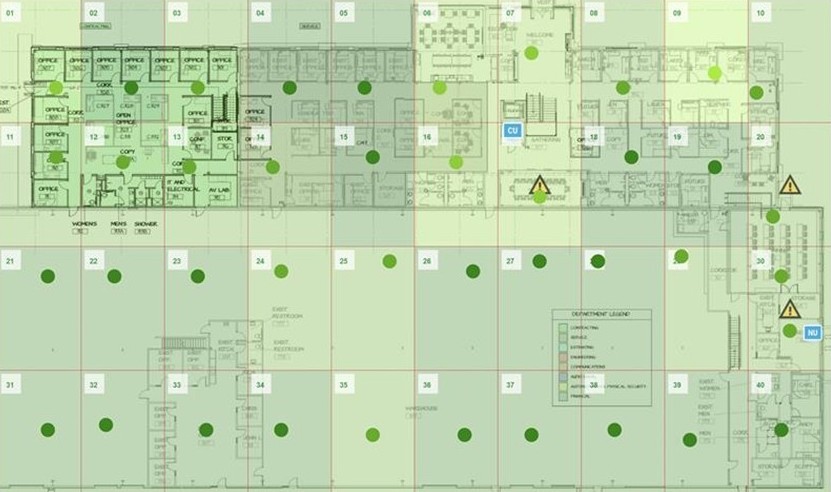
We start with a grid test to evaluate the building’s existing coverage from all three major wireless carriers.

REPORT

Next, we generate a comprehensive report that outlines signal strength levels.

DESIGN

Based on the survey results and coverage report, we design a custom Distributed Antenna System tailored to the building’s layout and specific requirements.

INSTALLATION

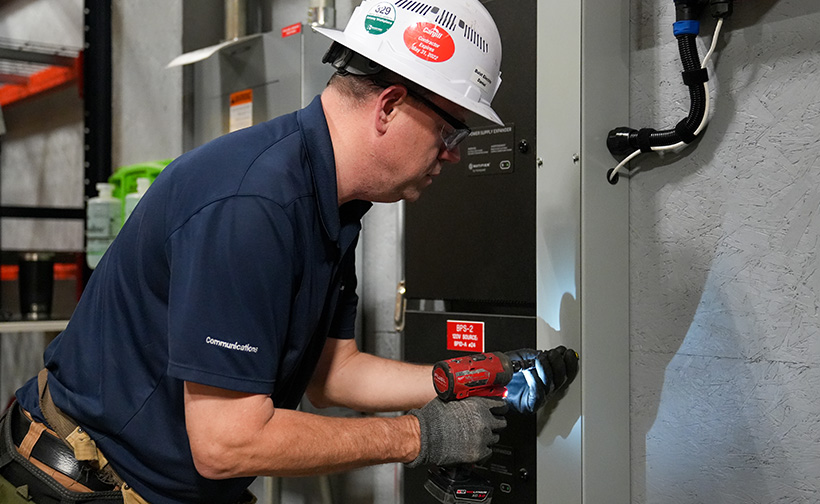
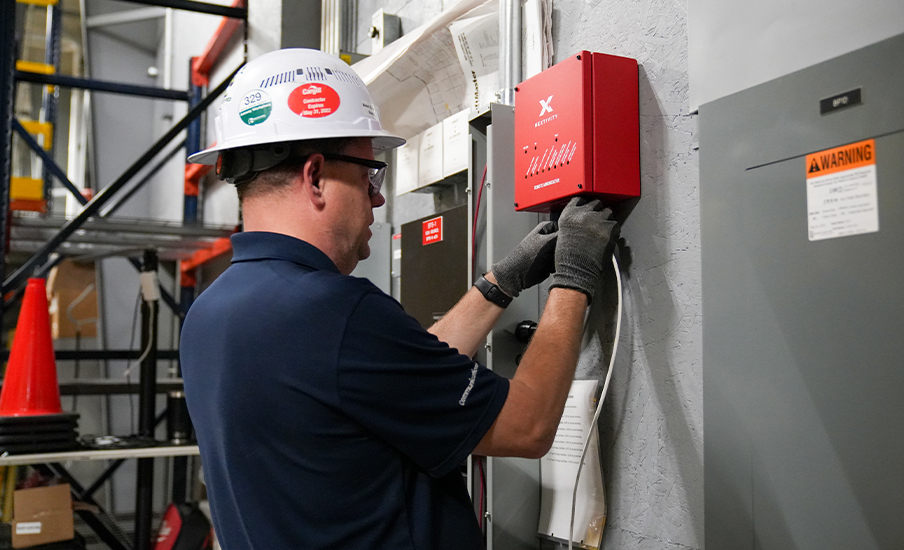
Our technicians install the system with minimal disruption, using industry best practices and certified equipment.

INSPECTION

We schedule and support the required authority having jurisdiction (AHJ) inspection to ensure the system meets all code standards.

COMPLETION

A post-installation survey has confirmed full system coverage and code compliance. Final documentation including the comprehensive report, system map, and post-survey comparison has been submitted. The system is now officially registered with the State of Michigan. Buist will provide ongoing annual servicing and maintenance.

Markets We Serve

Pattern Circuit Wide

PRODUCT PARTNERS

We work with leading DAS product partners to ensure reliable coverage, critical area protection, and full code compliance. Each system is expertly designed, installed, and supported through ongoing maintenance and testing. Our team is certified by Nextivity, demonstrating proven expertise in deploying high-performance in-building communication systems.

OUR PRODUCT PARTNERS

FEATURED CASE STUDIES

Lumbermen’s

Lumbermen’s Inc. cellular signal failure resolved with a Distributed Antenna System.

Download Here
Buist HQ

Buist identified a critical need to improve emergency communication capabilities within our headquarters.

Download Here

FAQ

What is a Distributed Antenna System (DAS)?

A Distributed Antenna System is a network of antennas placed throughout a building to improve wireless signal coverage and communication reliability.

Why do buildings need DAS?

Large buildings and dense construction materials such as concrete, steel, and low-emissivity glass can weaken or block cellular signals. As a result, occupants may experience dropped calls, poor voice quality, slow data speeds, or complete loss of service in certain areas of a building.

A Distributed Antenna System (DAS) improves in-building cellular coverage by capturing signal from a carrier source and distributing it throughout the facility using strategically placed antennas. This creates more consistent signal strength across spaces like basements, stairwells, mechanical rooms, and large open areas where coverage is typically limited.

DAS also supports critical communication needs. In commercial and industrial environments, it helps employees stay connected and supports day-to-day operations. In healthcare, education, and public buildings, it ensures occupants and staff can communicate without interruption. For emergency situations, DAS plays a key role in enabling first responders to maintain radio communication inside buildings, which is often required by code.

What is Public Safety DAS?

Public Safety DAS, also known as ERCES (Emergency Responder Communication Enhancement Systems), is designed to ensure that first responders can maintain reliable radio communication inside a building during an emergency. Many modern buildings, especially those constructed with concrete, steel, and energy-efficient glass, can block or weaken radio signals used by fire, police, and EMS teams.

A Public Safety DAS captures radio signals from local emergency communication systems, typically in the 700/800 MHz bands, and distributes that signal throughout the building using a network of antennas, cabling, and amplification equipment. This ensures consistent coverage in critical areas such as stairwells, basements, mechanical rooms, and elevator lobbies where communication is often most difficult.

These systems are often required by code in commercial and large-scale facilities. Requirements are typically driven by local fire authorities and standards such as National Fire Protection Association guidelines and IFC Section 510. Buildings must pass a coverage test, and if signal strength does not meet the required threshold, a Public Safety DAS must be installed to bring the building into compliance.

In addition to initial installation, Public Safety DAS systems require ongoing inspection, testing, and maintenance to ensure they function properly when needed. This includes battery backup verification, signal strength testing, and system monitoring.

How is DAS installed?

DAS is designed based on signal testing, then installed using a network of antennas, cabling, and signal sources throughout the facility.

LET'S GET STARTED

Contact our Distributed Antenna System department today. One of our team members will get back in touch with you.

Video Player Close Button